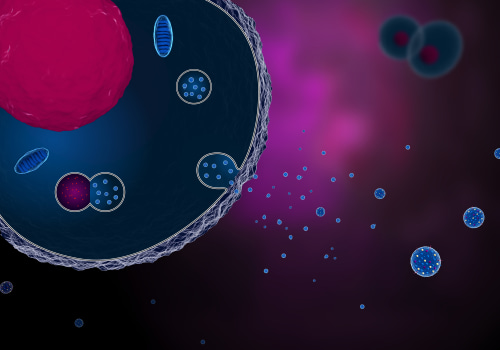
Exosomes are small extracellular vesicles, typically ranging from 30 to 150 nanometres in diameter, that are secreted by various cell types into the extracellular environment. These vesicles play a pivotal role in intercellular communication, acting as carriers of molecular signals that can influence the behaviour of recipient cells. Exosomes are formed through a complex process involving the inward budding of the endosomal membrane, leading to the creation of multivesicular bodies (MVBs) that eventually fuse with the plasma membrane to release their contents into the extracellular space.The biological functions of exosomes are diverse and multifaceted. They are known to transport a variety of biomolecules, including proteins, lipids, and nucleic acids such as mRNA and microRNA.
This cargo can modulate numerous physiological processes, including immune responses, cellular proliferation, and apoptosis. By transferring these molecular components, exosomes facilitate communication between cells, enabling them to coordinate responses to environmental changes or stressors. For instance, in the context of immune responses, exosomes can carry antigens that help activate T cells, thereby playing a crucial role in the body’s defence mechanisms.Moreover, exosomes have been implicated in various pathological conditions, including cancer and neurodegenerative diseases. Their ability to encapsulate and protect their cargo makes them ideal vehicles for delivering therapeutic agents or biomarkers for disease diagnosis.
As research continues to uncover the intricate roles of exosomes in health and disease, their potential applications in clinical settings become increasingly apparent.Understanding the fundamental characteristics and functions of exosomes is essential for appreciating their impact on viral infections. As we delve deeper into this topic, it becomes clear that these vesicles not only serve as vehicles for cellular communication but also play a significant role in how viruses interact with host cells and evade immune responses.
The Biogenesis of Exosomes
Exosomes are small extracellular vesicles that play a pivotal role in intercellular communication and are involved in various physiological and pathological processes. The biogenesis of exosomesbiogenesis of exosomes is a complex process that involves several cellular pathways and mechanisms, which are crucial for understanding how viruses may exploit these vesicles for their own propagation.The formation of exosomes begins with the inward budding of the plasma membrane, leading to the creation of early endosomes. These early endosomes can mature into late endosomes or multivesicular bodies (MVBs).During this maturation process, intraluminal vesicles (ILVs) are formed within the MVBs through a mechanism known as invagination. This process is facilitated by various proteins, including those from the ESCRT (endosomal sorting complexes required for transport) machinery, which play a critical role in the sorting and packaging of cargo into ILVs.Once formed, MVBs can either fuse with lysosomes for degradation or be transported to the plasma membrane, where they release their ILVs into the extracellular space as exosomes. This release is mediated by specific membrane fusion events that involve proteins such as SNAREs and Rab GTPases, which ensure the correct docking and fusion of MVBs with the plasma membrane.The composition of exosomes is highly variable and reflects the physiological state of the parent cell. They can encapsulate a diverse array of biomolecules, including proteins, lipids, and nucleic acids.
This cargo is not randomly selected; rather, it is selectively packaged based on various signals and pathways activated within the cell. For instance, certain stress conditions or viral infections can alter the biogenesis pathway, leading to an increased production of exosomes that may carry viral components or modulate immune responses.Understanding the intricacies of exosome biogenesis is essential not only for elucidating their physiological roles but also for comprehending how viruses may hijack these processes to enhance their infectivity. By manipulating the cellular machinery responsible for exosome production, viruses can facilitate their own transmission and evade host immune responses, making this area of research critical in virology.
Exosomes and Viral Pathogenesis
Exosomes have emerged as pivotal players in the pathogenesis of various viral infections, acting as vehicles for intercellular communication and influencing the immune response. These small extracellular vesicles, typically ranging from 30 to 150 nanometers in diameter, are secreted by almost all cell types and are involved in numerous physiological and pathological processes.One of the most well-studied examples of exosomal involvement in viral pathogenesis is seen in HIV-1.Research indicates that HIV-1 can exploit exosomal pathways to enhance its infectivity. Infected cells release exosomes that contain viral proteins and RNA, which can be taken up by uninfected cells, thereby facilitating the spread of the virus. This mechanism not only aids in viral transmission but also helps HIV-1 evade the host's immune system by masking its presence within exosomes.Similarly, Hepatitis B virus (HBV) has been shown to utilise exosomes for its propagation. Exosomes derived from HBV-infected hepatocytes have been found to carry intact viral particles, suggesting that they play a direct role in the dissemination of the virus.
This capability allows HBV to persist in the host and contributes to chronic infection, which is a significant public health concern due to its association with liver cirrhosis and hepatocellular carcinoma.Another notable example is the SARS-CoV-2 , the virus responsible for COVID-19. Studies have revealed that SARS-CoV-2 can induce the release of exosomes from infected cells that contain viral components. These exosomes can modulate the immune response by altering cytokine production, potentially leading to an exacerbated inflammatory response known as a cytokine storm. This phenomenon is particularly concerning as it can result in severe respiratory distress and other complications associated with COVID-19.The role of exosomes extends beyond merely facilitating viral entry into host cells; they also participate in modulating the host's immune response. For instance, exosomes released from infected cells can carry immunomodulatory molecules that either promote or inhibit immune responses, depending on the context of the infection.
This dual role underscores the complexity of exosomal functions in viral pathogenesis.In conclusion, exosomes are integral to understanding how viruses manipulate host cellular mechanisms to enhance their pathogenicity. By studying these interactions, researchers can uncover potential therapeutic targets for preventing and treating viral infections, ultimately improving public health outcomes.
Case Studies: Exosomes in Specific Viral Infections
Understanding the intricate relationship between exosomes and viral infections is crucial for developing effective therapeutic strategies. This section delves into specific case studies involving HIV, HBV, and SARS-CoV-2, highlighting how these viruses exploit exosomal pathways to enhance their infectivity and persistence.HIV and Exosomes
Human Immunodeficiency Virus (HIV) has been shown to interact with exosomes in complex ways. Research indicates that HIV can hijack the exosomal biogenesis machinery of host cells to facilitate its own replication.Exosomes derived from HIV-infected cells often contain viral proteins and RNA, which can be transferred to uninfected cells, thereby promoting the spread of the virus. This mechanism not only aids in viral transmission but also helps HIV evade the host's immune response.Moreover, studies have suggested that exosomes can carry HIV-specific antigens , which may serve as potential biomarkers for monitoring disease progression in infected individuals. The presence of these biomarkers in exosomes could provide insights into the viral load and immune status of patients, paving the way for more tailored treatment approaches.
HBV Transmission via Exosomes
Hepatitis B Virus (HBV) is another virus that utilises exosomal pathways for its transmission. Recent findings have demonstrated that exosomes released from HBV-infected hepatocytes contain intact viral particles.This suggests that exosomes play a significant role in the dissemination of HBV within the liver and potentially to other tissues. The ability of HBV to package itself within exosomes not only facilitates its spread but also aids in evading immune detection.Furthermore, the composition of these exosomes can vary depending on the stage of infection, which may influence the pathogenesis of HBV-related liver diseases. Understanding how HBV manipulates exosomal pathways could lead to novel therapeutic targets aimed at disrupting this process.
SARS-CoV-2 and Exosomal Role
The emergence of SARS-CoV-2 has brought renewed attention to the role of exosomes in viral infections. Studies have shown that SARS-CoV-2 can induce the release of exosomes from infected cells, which may carry viral components such as spike proteins.These exosomal particles can interact with neighbouring cells, potentially facilitating viral entry and enhancing inflammation.Additionally, exosomes released during SARS-CoV-2 infection have been implicated in modulating the immune response. They can carry pro-inflammatory cytokines and other signalling molecules that may contribute to the cytokine storm observed in severe COVID-19 cases. This highlights the dual role of exosomes as both vehicles for viral propagation and mediators of immune dysregulation.In conclusion, these case studies illustrate the diverse roles that exosomes play across different viral infections. By understanding these interactions, researchers can develop innovative strategies to combat viral diseases and improve patient outcomes.
Exosomes as Biomarkers in Viral Infections
Exosomes have emerged as promising biomarkers in the realm of viral infections, offering a novel approach to diagnostics that could revolutionise early detection and monitoring of diseases.These small extracellular vesicles, secreted by various cell types, encapsulate a diverse array of biomolecules, including proteins, lipids, and nucleic acids. The composition of exosomes can reflect the physiological state of their parent cells, making them valuable indicators of disease.In the context of viral infections, exosomes can carry viral components such as RNA and proteins, which can be detected in biological fluids like blood or saliva. This characteristic positions exosomes as potential non-invasive biomarkers for diagnosing infections like HIV. For instance, studies have demonstrated that exosomes derived from the plasma of HIV-positive individuals contain viral RNA and proteins, suggesting that they could serve as reliable indicators of viral load and disease progression.Moreover, the diagnostic potential of exosomes extends beyond HIV.
Research has shown that exosomal content can vary significantly in response to different viral infections, providing insights into the host's immune response and the stage of infection. For example:
- Hepatitis C Virus (HCV): Exosomes from HCV-infected patients have been found to contain specific microRNAs that correlate with disease severity.
- SARS-CoV-2: Exosomes released during COVID-19 infection may carry viral proteins that could aid in early diagnosis.
- Influenza Virus: Changes in exosomal protein profiles have been observed in patients with influenza, indicating their potential use in monitoring outbreaks.
Therapeutic Implications of Exosome Research
The exploration of exosomes in virology has opened new avenues for therapeutic interventions, particularly in the context of viral infections.Understanding the intricate biology of exosomes can lead to innovative strategies for treatment and prevention, leveraging their natural properties to combat viral diseases.One promising area of research is the development of exosome-based treatments. These treatments could harness the ability of exosomes to deliver therapeutic agents directly to target cells. For instance, exosomes can be engineered to carry antiviral drugs or RNA molecules that inhibit viral replication. This targeted delivery system not only enhances the efficacy of the treatment but also reduces potential side effects associated with systemic drug administration.Moreover, exosomes derived from immune cells have shown potential in modulating immune responses.
By utilising exosomes that contain specific cytokines or immune-modulating factors, researchers aim to enhance the body’s natural defence mechanisms against viral infections. This approach could be particularly beneficial in cases where the immune response is inadequate or dysregulated, such as in chronic viral infections.Another exciting prospect lies in the use of exosomes as biomarkers for viral infections. The presence of specific viral components within exosomes can serve as indicators of infection, allowing for earlier diagnosis and more tailored treatment strategies. This biomarker potential is especially relevant for viruses like HIV and Hepatitis C, where timely intervention is crucial for effective management.As we look towards the future of virology therapies, it is essential to consider the implications of manipulating exosomal pathways.
By understanding how viruses exploit these pathways for their own benefit, researchers can develop countermeasures that disrupt viral transmission and replication. For example, targeting the mechanisms by which viruses hijack exosomal biogenesis could lead to novel antiviral therapies that prevent the spread of infection.In conclusion, the therapeutic implications of exosome research are vast and varied. From developing targeted drug delivery systems to enhancing immune responses and identifying biomarkers, the potential applications are significant. Continued research into exosomal biology will undoubtedly pave the way for innovative treatments that could transform our approach to managing viral infections.
Challenges and Future Directions in Exosome Research
The field of exosome research is rapidly evolving, yet it faces several significant challenges that hinder our understanding and application of these extracellular vesicles in virology and beyond.One of the primary obstacles is the heterogeneity of exosomes. These vesicles vary widely in size, composition, and function depending on their cellular origin and the physiological state of the donor cells. This variability complicates the standardisation of isolation and characterisation techniques, making it difficult to compare results across studies.Another challenge lies in the isolation methods used to extract exosomes from biological fluids. While ultracentrifugation remains the gold standard, it is time-consuming and may not yield pure populations of exosomes.
Alternative methods, such as size-exclusion chromatography and immunoaffinity capture, are being explored but require further validation to ensure they provide reliable and reproducible results.Moreover, there is a significant gap in our understanding of the mechanisms by which exosomes influence viral infections. While some studies suggest that exosomes can either facilitate or inhibit viral entry and replication, the precise molecular pathways involved remain largely unexplored. This lack of knowledge limits our ability to harness exosomes for therapeutic purposes.Looking towards the future, several research directions could enhance our understanding of exosomes in virology:
- Standardisation of protocols: Developing universally accepted protocols for exosome isolation and characterisation will facilitate comparisons across studies and enhance reproducibility.
- Mechanistic studies: Investigating the specific molecular interactions between exosomes and viruses will provide insights into their roles in viral pathogenesis.
- Therapeutic applications: Exploring the potential of exosomes as drug delivery vehicles or as biomarkers for early detection of viral infections could lead to innovative treatment strategies.
- Longitudinal studies: Conducting long-term studies on exosomal profiles during viral infections may reveal dynamic changes that correlate with disease progression or resolution.
Conclusion: The Significance of Exosomes in Virology
In summary, the exploration of exosomes in the realm of virology has unveiled a complex and multifaceted relationship that is crucial for understanding viral infections. As we have discussed, exosomes are not merely by-products of cellular processes; they are active participants in the pathogenesis and transmission of various viruses.Their ability to encapsulate and transport viral components, as well as modulate immune responses, positions them as significant players in the dynamics of viral infections.One of the most compelling aspects of exosomes is their dual role in viral infections. On one hand, they can facilitate the spread of viruses such as HIV-1 and HBV by carrying intact viral particles and genetic material to uninfected cells. This capability underscores the potential of exosomes to act as vectors for viral dissemination, complicating efforts to control outbreaks and manage infections. On the other hand, exosomes also hold promise as biomarkers for disease detection and monitoring, particularly in chronic infections where traditional diagnostic methods may fall short.The implications of these findings extend beyond basic virology.
Understanding how viruses exploit exosomal pathways can inform the development of novel therapeutic strategies aimed at disrupting these interactions. For instance, targeting exosomal biogenesis or their uptake mechanisms could provide new avenues for antiviral therapies. Furthermore, harnessing the natural properties of exosomes could lead to innovative vaccine delivery systems or targeted treatments that enhance immune responses against specific viral pathogens.As research continues to evolve, it is imperative that we deepen our understanding of the molecular mechanisms governing exosome biology in the context of viral infections. This knowledge will not only enhance our grasp of viral pathogenesis but also pave the way for advancements in public health strategies aimed at preventing and treating viral diseases.In conclusion, the significance of exosomes in virology cannot be overstated.
They represent a critical intersection between cellular communication and viral pathogenesis, offering insights that could transform our approach to managing viral infections. Continued investigation into their roles will undoubtedly yield valuable information that can be leveraged for therapeutic benefit.