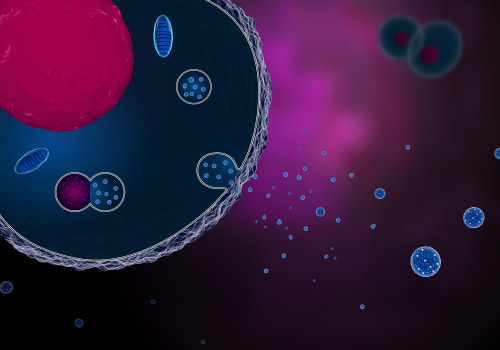
Exosomes are small extracellular vesicles that play a pivotal role in intercellular communication, facilitating the transfer of proteins, lipids, and nucleic acids between cells. These nanometre-sized particles, typically ranging from 30 to 150 nm in diameter, are secreted by various cell types and are involved in numerous physiological processes, including immune response modulation, tissue repair, and cellular homeostasis. Their ability to carry molecular cargo makes them essential players in both health and disease, particularly in the context of viral infections.Viruses, on the other hand, are microscopic infectious agents that require a host cell to replicate and propagate. They exhibit a diverse range of structures and sizes, often overlapping with those of exosomes. Exosomes are small extracellular vesicles that play a pivotal role in intercellular communication, facilitating the transfer of proteins, lipids, and nucleic acids between cells. These nanometre-sized particles, typically ranging from 30 to 150 nm in diameter, are secreted by various cell types and are involved in numerous physiological processes, including immune response modulation, tissue repair, and cellular homeostasis. Their ability to carry molecular cargo makes them essential players in both health and disease, particularly in the context of viral infections.Viruses, on the other hand, are microscopic infectious agents that require a host cell to replicate and propagate. They exhibit a diverse range of structures and sizes, often overlapping with those of exosomes.
This similarity has led to intriguing questions about the relationship between exosomes and viruses. In particular, retroviruses share notable characteristics with exosomes, such as their size and lipid composition. This resemblance raises the possibility that viruses may exploit the cellular machinery responsible for exosome biogenesis to enhance their own replication and evade host immune responses.The interplay between exosomes and viruses is complex and multifaceted. On one hand, exosomes can facilitate viral transmission by carrying viral components or even complete virions to uninfected cells.
On the other hand, they can also modulate the immune response against viral infections, either promoting or inhibiting antiviral mechanisms. This dual role underscores the importance of understanding how exosomes function within the context of viral pathogenesis.As we delve deeper into this topic, it becomes evident that exploring the nuances of exosome-virus interactions is crucial for developing novel therapeutic strategies against viral diseases. By elucidating how these two entities influence each other, researchers can uncover new avenues for intervention that may enhance our ability to combat viral infections effectively.
What Are Exosomes?
Exosomes are small extracellular vesicles that play a crucial role in intercellular communication. They are typically between 30 and 150 nanometers in diameter and are released by various cell types into the extracellular environment.These vesicles are formed through a complex process involving the inward budding of the plasma membrane, leading to the creation of multivesicular bodies (MVBs). When these MVBs fuse with the plasma membrane, they release their internal vesicles, which are known as exosomes.The definition of exosomes can be summarised as membrane-bound vesicles that carry a diverse array of molecular cargo, including proteins, lipids, and nucleic acids such as microRNAs (miRNAs) and messenger RNAs (mRNAs). This cargo is reflective of the physiological state of the parent cell, making exosomes valuable indicators of cellular health and function.One of the primary functions of exosomes is to facilitate communication between cells. They achieve this by transferring their molecular contents to recipient cells, thereby influencing various biological processes.
For instance, exosomes can modulate immune responses, promote tissue repair, and even contribute to the progression of diseases such as cancer. The transfer of miRNAs via exosomes has been shown to regulate gene expression in target cells, highlighting their role in post-transcriptional regulation.Moreover, exosomes are involved in several physiological and pathological processes. In the context of viral infections, for example, exosomes can carry viral components or modulate immune responses to enhance or inhibit viral replication. This dual role underscores the complexity of exosome functions and their significance in both health and disease.In summary, exosomes are vital players in cellular communication, serving as vehicles for molecular exchange that can significantly impact various biological functions.
Their unique properties and diverse roles make them a focal point of research in understanding cellular interactions and disease mechanisms.
Characteristics of Viruses
Viruses are unique entities that straddle the line between living and non-living. They are fundamentally different from cellular organisms, possessing distinct characteristics that define their structure and function. Understanding these characteristics is crucial for comparing viruses with exosomes, which share some similarities in size and composition.Structure of Viruses
- Capsid: The outer shell of a virus, known as the capsid, is composed of protein subunits called capsomers. This protective layer encases the viral genetic material, which can be either DNA or RNA.
The arrangement of capsomers can vary, leading to different shapes such as helical, icosahedral, or complex forms.
- Envelope: Some viruses possess an additional lipid bilayer known as an envelope, derived from the host cell membrane during viral budding. This envelope contains viral glycoproteins that facilitate attachment and entry into host cells. Enveloped viruses tend to be more sensitive to environmental factors compared to non-enveloped viruses.
- Genetic Material: The core of a virus consists of its genetic material, which can be single-stranded or double-stranded and may exist in linear or circular forms. This genetic material encodes the information necessary for the virus to replicate and produce new virions.
Classification of Viruses
Viruses are classified based on several criteria:
- Type of Nucleic Acid: Viruses can be categorized into DNA viruses and RNA viruses.
DNA viruses include examples like Herpesviridae and Adenoviridae, while RNA viruses encompass families such as Retroviridae and Orthomyxoviridae.
- Shape: The morphology of viruses plays a significant role in their classification. For instance, bacteriophages have a complex structure with a head and tail, while many animal viruses exhibit spherical or filamentous shapes.
- Mode of Transmission: Viruses can also be classified based on how they spread. Some are transmitted through respiratory droplets (e.g., influenza), while others may spread via blood (e.g., HIV) or vectors like mosquitoes (e.g., Zika virus).
Similarities Between Exosomes and Viruses
Understanding the similarities between exosomes and viruses is crucial for elucidating their roles in cellular communication and disease processes.Both entities share notable characteristics in terms of size, composition, and function, which can sometimes blur the lines between them.Firstly, in terms of size , exosomes typically range from 30 to 150 nm in diameter, while viruses can vary significantly, with many falling within a similar range of 25 to 250 nm. Notably, retroviruses, which are a subset of viruses, often measure between 100 to 200 nm, overlapping with the upper size limit of exosomes. This similarity in size facilitates their interaction with cellular structures and may contribute to their ability to evade immune detection.Secondly, the composition of exosomes and viruses exhibits striking parallels. Both are composed of lipid bilayers that encapsulate various biomolecules.
Exosomes carry proteins, lipids, and nucleic acids derived from their parent cells, while viruses encapsulate their genetic material (DNA or RNA) along with proteins necessary for infection. This shared structural feature allows both exosomes and viruses to engage in complex interactions with host cells.Moreover, the functionality of exosomes and viruses also aligns closely. Exosomes are known for their role in mediating intercellular communication by transferring molecular signals between cells. Similarly, viruses exploit this mechanism to propagate their genetic material and modulate host cell responses.
For instance, viral particles can hijack the exosomal pathways to enhance their own transmission or evade immune responses.The dual nature of these entities raises intriguing questions about when a virus might be considered an exosome. In certain contexts, particularly during viral infections where exosomes are laden with viral components, the distinction may become less clear. This phenomenon underscores the importance of further research into the mechanisms governing exosome production and viral replication.In conclusion, the similarities between exosomes and viruses in terms of size, composition, and function highlight a complex relationship that warrants deeper investigation. Understanding these parallels not only enhances our knowledge of cellular communication but also opens new avenues for therapeutic interventions targeting viral infections.
The Role of Exosomes in Viral Infections
Exosomes play a pivotal role in the landscape of viral infections, acting as both facilitators and modulators of viral transmission and immune responses.These nanosized extracellular vesicles, typically ranging from 30 to 150 nm, are secreted by various cell types and are rich in proteins, lipids, and nucleic acids. Their ability to carry molecular cargo makes them crucial players in intercellular communication, particularly during viral infections.One of the primary functions of exosomes in the context of viral infections is their capacity to influence the immune response. When cells are infected by viruses, they often release exosomes that contain viral components, such as proteins and RNA. This release can serve multiple purposes:
- Immune Modulation: Exosomes can carry microRNAs (miRNAs) that modulate the immune response by downregulating antiviral genes or promoting inflammatory pathways.
This can lead to a dampened immune response, allowing the virus to replicate more efficiently.
- Viral Transmission: Exosomes can encapsulate complete virions or viral components, facilitating their transfer to uninfected cells. This mechanism not only aids in the spread of the virus but also helps it evade detection by the host's immune system.
- Cellular Communication: By transferring signaling molecules, exosomes can alter the behaviour of recipient cells, potentially making them more susceptible to infection or enhancing their ability to support viral replication.
By understanding how exosomes contribute to viral transmission and immune evasion, researchers may develop novel strategies to enhance antiviral responses or inhibit viral spread. For example, therapies that block exosome release or alter their content could potentially limit the ability of viruses to propagate within a host.In summary, exosomes are integral to the dynamics of viral infections. Their role in modulating immune responses and facilitating viral transmission underscores their importance in understanding viral pathogenesis and developing effective therapeutic interventions.
Mechanisms of Interaction: How Viruses Hijack Exosomal Pathways
Viruses have evolved sophisticated strategies to exploit the cellular machinery of their hosts, particularly through the hijacking of exosomal pathways. This manipulation allows viruses not only to replicate efficiently but also to evade the host's immune responses.Understanding these mechanisms is crucial for developing effective antiviral therapies.Exosomes, which are small extracellular vesicles, play a pivotal role in intercellular communication and the regulation of immune responses. When a cell is infected by a virus, it can release exosomes that contain viral components, including proteins and nucleic acids. This process serves multiple purposes:
- Facilitating Viral Spread: Exosomes can encapsulate viral particles or their components, allowing for their transport to neighbouring cells. This method of transmission can enhance the spread of the virus within the host without triggering a robust immune response.
- Modulating Immune Responses: The contents of exosomes released from infected cells can influence the immune system.
For instance, they may carry microRNAs (miRNAs) that downregulate antiviral genes in recipient cells, thereby dampening the host's immune response and facilitating viral persistence.
- Utilising Host Machinery: Viruses can co-opt the cellular machinery responsible for exosome biogenesis. By interacting with proteins involved in exosomal formation, such as those in the endosomal sorting complexes required for transport (ESCRT), viruses can enhance their own replication and packaging into exosomes.
For instance, they may induce changes in lipid composition or protein expression on the surface of exosomes, making them more effective at evading immune surveillance.In summary, the interaction between viruses and exosomal pathways is a complex and dynamic process that significantly impacts viral replication and immune evasion. By understanding these mechanisms, researchers can identify potential targets for therapeutic intervention aimed at disrupting these interactions and enhancing host immunity against viral infections.
Case Studies: Specific Viruses and Their Relationship with Exosomes
Understanding the intricate relationship between viruses and exosomes is crucial for developing effective therapeutic strategies. This section delves into specific case studies involving notable viruses such as HIV and the influenza virus, highlighting their interactions with exosomes and the implications for viral transmission and immune response modulation.Understanding the intricate relationship between viruses and exosomes is crucial for developing effective therapeutic strategies. This section delves into specific case studies involving notable viruses such as HIV and the influenza virus, highlighting their interactions with exosomes and the implications for viral transmission and immune response modulation.HIV and Exosomes
Human Immunodeficiency Virus (HIV) serves as a prime example of how viruses exploit exosomal pathways to enhance their infectivity. Research has shown that HIV-infected cells release exosomes that contain viral proteins, including HIV-1 Gag and Env, which play pivotal roles in the virus's life cycle.These exosomes can facilitate the transfer of viral components to uninfected cells, thereby promoting the spread of infection.Moreover, exosomes derived from HIV-infected cells have been found to carry specific microRNAs (miRNAs) that can modulate the immune response. For instance, these miRNAs can downregulate the expression of antiviral genes in recipient cells, effectively dampening the host's immune response and allowing the virus to persist longer within the host. This dual role of exosomes—acting as vehicles for viral dissemination while simultaneously suppressing immune activity—illustrates the complex interplay between HIV and exosomal biology.
Influenza Virus and Exosomes
The influenza virus also demonstrates a significant relationship with exosomes. Studies indicate that influenza-infected cells release exosomes that contain viral RNA and proteins, which can influence both viral replication and host cell responses.These exosomal particles can serve as decoys for the immune system, diverting attention away from actual viral particles and thus aiding in immune evasion.Additionally, exosomes from influenza-infected cells have been shown to carry pro-inflammatory cytokines, which can exacerbate inflammation in surrounding tissues. This inflammatory response is a double-edged sword; while it may help to control viral spread initially, excessive inflammation can lead to tissue damage and contribute to severe disease outcomes.
Implications for Therapeutic Strategies
The insights gained from studying the interactions between viruses like HIV and influenza with exosomes open new avenues for therapeutic interventions. Targeting exosomal pathways could potentially disrupt viral transmission or enhance immune responses against these pathogens. For instance, therapies aimed at inhibiting exosome release or altering their content could reduce viral load and improve patient outcomes.In conclusion, case studies on HIV and influenza underscore the importance of understanding how viruses manipulate exosomal mechanisms to their advantage.By elucidating these relationships, researchers can develop innovative strategies to combat viral infections more effectively.
Exosome Purification Techniques: Distinguishing Between Exosomes and Viruses
Purifying exosomes from viral particles is a critical step in understanding their roles in cellular communication and disease processes. Given the similarities in size and composition between exosomes and viruses, researchers employ various techniques to effectively distinguish and isolate these entities. Below, we explore some of the most widely used methods for exosome purification.1.Ultracentrifugation
Ultracentrifugation is one of the most common techniques for isolating exosomes. This method involves spinning cell culture supernatants at high speeds to separate vesicles based on their density.The process typically includes:
- Initial centrifugation: This step removes cells and large debris by spinning at low speeds.
- Sequential ultracentrifugation: The supernatant is then subjected to higher speeds, allowing exosomes to pellet at specific centrifugal forces.
- Washing steps: The pelleted exosomes are often washed to remove contaminants, including proteins and viral particles.
2.Size-Exclusion Chromatography (SEC)
Size-exclusion chromatography is another powerful technique that separates exosomes based on their size. In this method, a column filled with porous beads allows smaller molecules, such as proteins and viruses, to pass through while retaining larger exosomes. The advantages of SEC include:- Gentle separation: This method preserves the integrity of exosomes, making it suitable for downstream applications.
- High purity: SEC can effectively separate exosomes from smaller viral particles, enhancing the purity of the isolated vesicles.
3.Affinity-Based Methods
Affinity-based purification techniques leverage specific interactions between exosomal surface markers and antibodies or ligands. These methods can provide high specificity in isolating exosomes while minimizing contamination from viral particles.Common approaches include:
- Magnetic bead separation: Magnetic beads coated with antibodies against exosomal proteins can capture exosomes from complex mixtures.
- Agarose gel electrophoresis: This technique can also be employed to separate exosomes based on their surface characteristics.
4.Microfluidic Devices
Emerging technologies such as microfluidic devices offer innovative solutions for exosome purification. These devices utilize small-scale fluid dynamics to separate exosomes from viruses based on size, charge, or affinity. Advantages include:- High throughput: Microfluidic systems can process multiple samples simultaneously, increasing efficiency.
- Reduced sample volume: These devices require minimal sample input, making them ideal for precious biological samples.
Future Directions: Research Opportunities in Exosome-Virus Interactions
The intricate relationship between exosomes and viruses presents a wealth of opportunities for future research, particularly in the fields of virology and cellular biology.As our understanding of exosomal functions continues to evolve, several promising avenues for exploration emerge.
1.Mechanistic Insights into Exosome-Virus Interactions
Future studies could delve deeper into the molecular mechanisms that govern the interactions between exosomes and viruses. Understanding how viruses exploit exosomal pathways for their own replication and transmission could unveil novel therapeutic targets. For instance, research could focus on the specific proteins and microRNAs carried by exosomes that facilitate viral entry into host cells or modulate immune responses.
2.Therapeutic Applications of Exosomes
Given their role in intercellular communication, exosomes hold potential as vehicles for targeted drug delivery. Future research could investigate how exosomes can be engineered to carry antiviral agents or vaccines, enhancing their efficacy and reducing side effects.
This approach could revolutionise treatment strategies for viral infections, particularly in cases where traditional therapies have failed.
3.Exosomes as Biomarkers
Exosomes are increasingly recognised as valuable biomarkers for various diseases, including viral infections. Future studies could focus on identifying specific exosomal signatures associated with different viral pathogens. This could lead to the development of non-invasive diagnostic tools that allow for early detection and monitoring of viral diseases.
4.The Role of Exosomes in Immune Modulation
Research should also explore how exosomes influence the immune landscape during viral infections. Investigating the dual role of exosomes in either promoting or inhibiting antiviral immunity could provide insights into disease progression and recovery.
Understanding these dynamics may lead to innovative immunotherapeutic strategies.
5.Emerging Technologies in Exosome Research
The advent of advanced technologies such as single-vesicle analysis and high-throughput sequencing offers exciting possibilities for exosome research. These tools can facilitate a more comprehensive understanding of exosomal content and function, paving the way for breakthroughs in our knowledge of virus-exosome interactions.In conclusion, the future of research on exosomes and their interactions with viruses is ripe with potential. By exploring these avenues, scientists can not only enhance our understanding of viral pathogenesis but also develop innovative strategies for prevention and treatment.
<strong>Conclusion</strong>: Summarising Key Insights on Exosomes and Viruses
In conclusion, the intricate relationship between exosomes and viruses reveals a complex interplay that significantly impacts viral transmission and immune response. Throughout this article, we have explored how exosomes, which are small extracellular vesicles, play dual roles in the context of viral infections.They can facilitate both the spread of viruses and the modulation of host immune responses.One of the key insights is that exosomes can carry viral components, including proteins and genetic material, thereby aiding in the dissemination of viruses from infected to uninfected cells. This mechanism not only enhances viral replication but also allows viruses to evade the host's immune system. For instance, exosomes released from virus-infected cells often contain microRNAs that can influence the behaviour of recipient cells, potentially promoting a more favourable environment for viral persistence.Moreover, the similarities in size and composition between exosomes and viruses complicate their distinction in biological studies. Both entities range from 30 to 250 nm in diameter, which poses challenges for purification and analysis.
However, advancements in techniques such as affinity-based purification have enabled researchers to differentiate between exosomes and viral particles effectively.Another significant point is the role of cellular machinery in the biogenesis of both exosomes and viruses. The hijacking of exosomal pathways by viruses illustrates a sophisticated strategy employed by pathogens to enhance their infectivity while simultaneously undermining host defence mechanisms. This phenomenon underscores the importance of understanding exosomal biology not only for virology but also for developing therapeutic strategies against viral diseases.In summary, the relationship between exosomes and viruses is multifaceted, characterised by both cooperation and conflict. As we continue to unravel these complexities, it becomes increasingly clear that targeting exosomal pathways may offer novel avenues for therapeutic intervention in viral infections.
The insights gained from this exploration highlight the need for further research into exosome-mediated processes to fully understand their implications in health and disease.